Beginner’s mind · 初心
Once you think you know, you are finished. You don’t learn anymore.
— Hidetaka Nishiyama Sensei
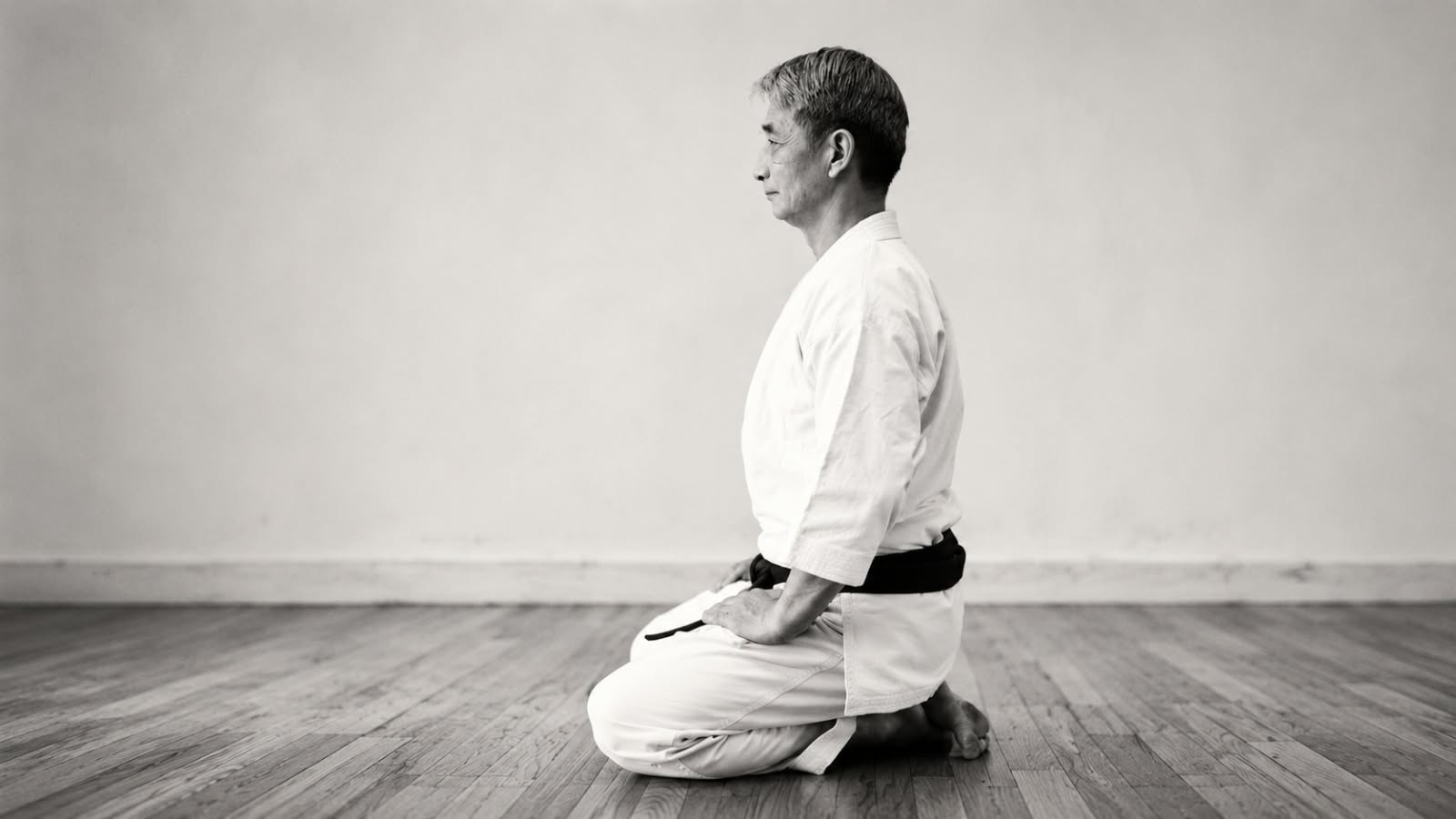
Our motto
…Form is limitation, a necessary limitation, therefore ultimately we should be free of form. Being free of form mentally and physically will allow us to flow, adopt, and apply our techniques within any space, angle or instant in time, and from any starting position…
Latest essays
26 pieces-
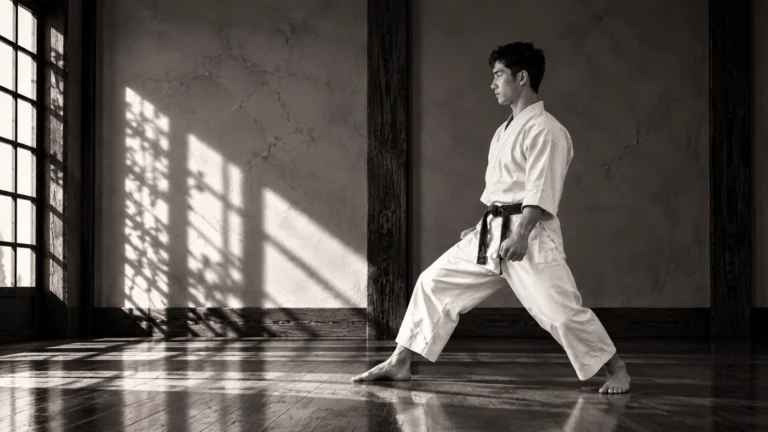
Karate from Inside – Stances: The Foundation in Motion
Read essay: Karate from Inside – Stances: The Foundation in MotionA stance can be defined as a temporary organisation of the feet, legs, pelvis and centre that allows the body to interact with the ground in…
-
Karate from Inside – Will and Ageing
Read essay: Karate from Inside – Will and Ageing“In karate we have no peak, no limit,” Nishiyama Sensei once said. But if there is no peak to reach, no final level at which mastery…
-
Karate from Inside – Posture: The Blueprint of Potential
Read essay: Karate from Inside – Posture: The Blueprint of PotentialIn traditional karate, we spend years correcting nothing more than how we stand. This piece explains why: posture is where the body first meets pressure, and…
-
Karate from Inside – Why Philosophy Matters
Read essay: Karate from Inside – Why Philosophy MattersThere comes a moment in karate training when the physical corrections stop and something harder to name begins. Your Sensei is no longer watching (just) your…
-
Growing older in Karate
Read essay: Growing older in KarateAgeing is not a choice, but how you age is. When the body starts changing the rules, why do some older karateka move better than ever…
-
One Body
Read essay: One BodyHow do the mechanical, regulatory, and perceptual layers of traditional karate training integrate into a single coherent system? The third article in the science series.
Testimonials
What others say
Andrzej Czyrka is the ideal karate teacher and student, always questioning, always learning and always improving.

Avi Rokah
9 Dan, USA
On the same path since 1983 – in the same dojo for many years, as a team, as friends. We’re still in touch, though sadly not as often as I’d like. It is with joy, admiration and respect that I follow your achievements in karate. Thank you for being there, thank you for being how you are…
Mariusz Kazanowski
3 Dan, Poland
I have a deep and sincere admiration for Andrzej, both for his total physical commitment and for his insightful analyses and profound understanding of the principles of traditional karate — a true example to follow.
Sylvain Jouan
4 Dan, France
While I have trained in karate for many years, Sensei Andrzej Czyrka has given me a new depth of understanding. I am very grateful for his insight.

Nick Cromwell
3 Dan, UK
Varied programme for all grades and a safe environment to learn what really works!
Steve Palmer
1 Dan, UK
Osoba oddana tradycyjnemu karate, nieustannie rozwijająca ciało i umysł. Posiada umiejętności techniczne i praktyczne na światowym poziomie oraz ogromną wiedzę i doświadczenie.
Rafał Wajda
4 Dan, Poland
Beyond his technical ability, Andrzej is known for his friendly and humble nature. He leads by example, inspiring those around him through his discipline, integrity, and quiet determination. He embodies the true spirit of Budō, showing that mastery is not only about skill, but also about character.
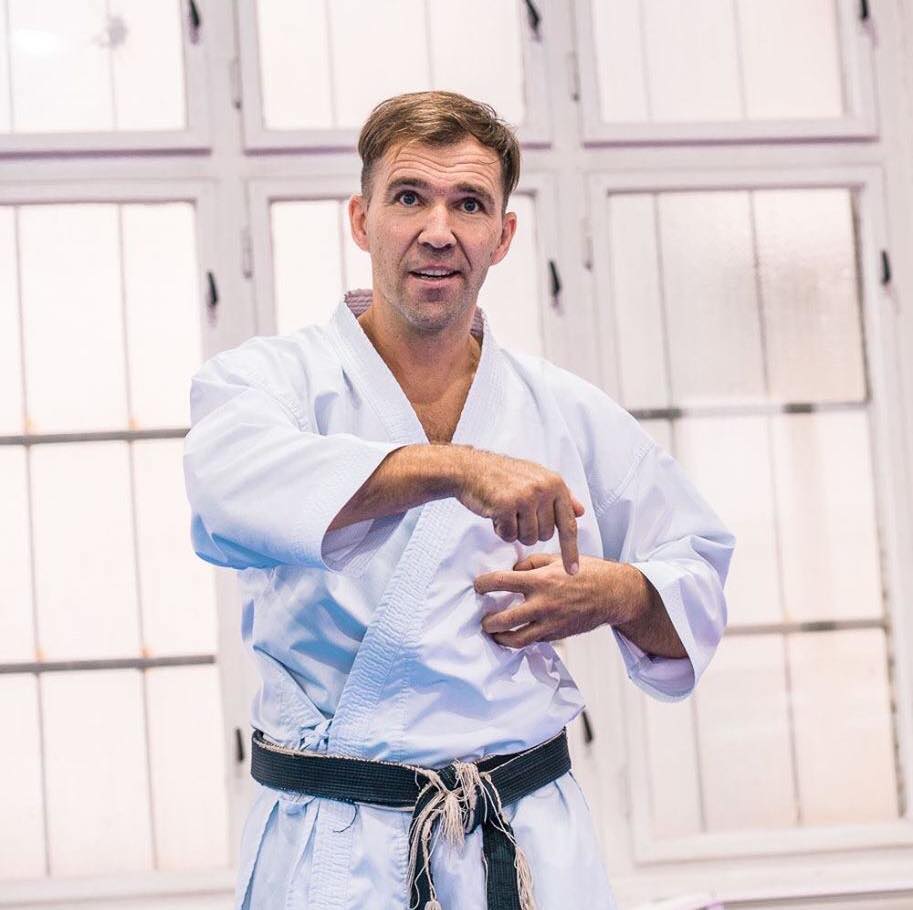
Giedrius Dranevicius
7 Dan, Lithuania
A formidable mentor and coach with a pioneering spirit, with the ability to translate the traditional principles of budo into an effective fighting system. He leads by example and it is my honour and privilege to train under him.

Mario Kalli
5 Dan, UK
New here
Where to begin
If you’re new here, start with a curated selection of foundational articles that introduce the key principles of Traditional Karate as taught by Nishiyama Sensei and followed by Sensei Rokah.